 Book a Free Consultation

Cellhub · 2026
Hospital
without Walls
Healthcare has moved beyond the hospital. Has your infrastructure?
Download expert white papers and watch healthcare leaders discuss how hospitals are extending care beyond their walls through modern networks, cybersecurity, mobility, and strategic IT transformation
Scroll
// The Challenge
Healthcare leaders are being asked to solve three problems at the same time.
Protect. Cybersecurity attacks, ransomware, and network outages continue to threaten patient safety and operational continuity.
Optimize. Shrinking margins and rising technology costs require hospitals to do more with fewer resources.
Grow. Expanding access to care, supporting remote services, and reaching underserved communities requires infrastructure that extends far beyond the hospital campus.
These priorities often compete for the same budget, resources, and attention.
The Hospitals Without Walls framework explores how healthcare organizations can address all three, creating a more secure, efficient, and connected future for care delivery.
// By the Numbers
Built for
Hospital Systems
Academic Medical Centers
Integrated Delivery Networks
Home Health Programs
Ambulatory Networks
Healthcare is the #1 target for ransomware in the United States. Attacks shut down imaging systems, divert emergency rooms, and halt operations.
Source: Healthcare cybersecurity reports, 2024
#1
A hospital taken offline costs over $1 million per hour. Recovery speed is a patient safety issue, not just an IT one.
Source: Ponemon Institute Healthcare Cybersecurity Report
$1M+
T-Mobile low-band 5G covers 98% of the U.S. population. For health systems with visiting nurses and remote clinics, that is a clinical continuity guarantee.
Source: T-Mobile Network Coverage Report
98%
// Video Series
Hear It From
the Experts.
Healthcare leaders and technology partners on what it actually takes to move care outside the hospital.
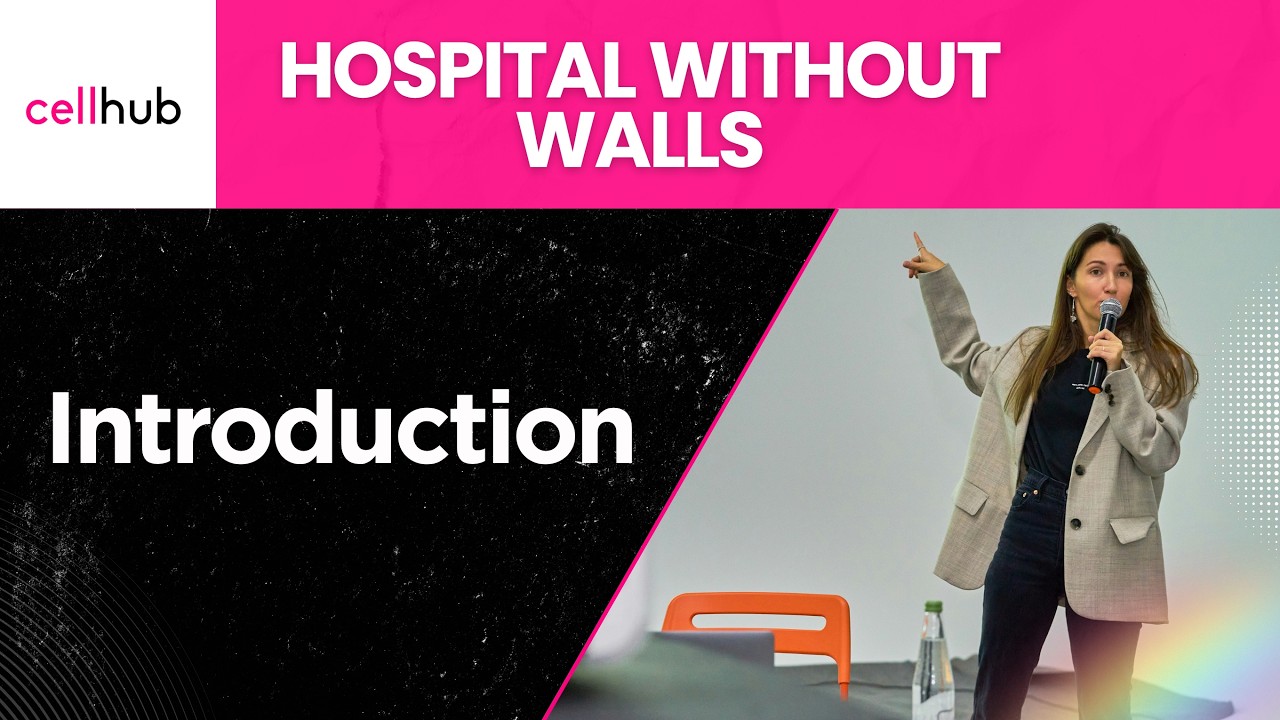
Introduction
Care happens everywhere now. This video lays out what that means for hospitals still running infrastructure built for one building.

New Business Model Needed
The ask has changed. Hospitals are expected to do more, reach further, and spend less. This video looks at what that means for how you structure the operation and the budget.

Success Requires Partnerships
No single vendor can do this. This video breaks down why the partner ecosystem matters as much as the technology.
// The Model
What Cellhub Owns.
—
Cost savings & optimization
Network governance, device lifecycle, and vendor consolidation under one model.
—
One accountable partner
No more managing a dozen vendors. Cellhub owns the orchestration.
—
Cyber resilience & IRE
Isolated Recovery Environments that attackers physically cannot reach.
—
New revenue & care extension
RPM, value-based care models, and new reimbursement streams.
—
Clinical device connectivity
Deterministic QoS for RTLS, monitoring, and imaging workflows.
—
T-Mobile 5G network fabric
98% U.S. coverage from hospital campus to the patient's home.
“
// The Cellhub Perspective
Hospitals don't need more vendors. They need someone accountable.
// Research Collection
Three Whitepapers.
Three Whitepapers.
One Direction.
Each whitepaper covers a different piece of the problem: how hospitals pay for this, how they protect against attacks, and how the network architecture actually gets built. Download each one individually or get all three at once.
Download All Three// Research Findings
What the Research
Tells CTOs.
01
Most healthcare IT models are vendor-led. Accountability is distributed, so when something fails, no one owns it. One partner who does own it changes the whole equation.
02
Boston Children's Hospital went 14 consecutive months without a single cellular connectivity trouble ticket after partnering with T-Mobile for Business. That is nearly 3 million square feet across 19 buildings.
03
T-Mobile's low-band 5G covers 98% of the U.S. population. For health systems with visiting nurses and remote clinics, that is not a carrier feature. It is a clinical continuity guarantee.
04
A traditional clean room is not truly isolated if it connects to the same network the attackers have already compromised. An IRE built on Private 5G runs on dedicated spectrum. There is no IP path for attackers to follow.
05
Private 5G and Hybrid 5G are not competing options. They solve different problems. Clinical devices need deterministic QoS. Staff phones need carrier-grade E911. Most hospitals need both, on the same infrastructure.
06
T-Mobile's 5G On Demand deploys a temporary private 5G network in under 48 hours. That makes it a viable option for hospital-at-home programs and ED overflow without a permanent infrastructure commitment.

// Book a Consultation
15 Minutes.
A Real Answer.
Book a call with a Cellhub specialist. We will look at your current network setup, identify where accountability is breaking down across your vendor stack, and give you a clear read on what it would take to close the gaps. No proposal. No pitch deck. Just an honest look at where you stand.
A Cellhub specialist will confirm your time within three business days.